
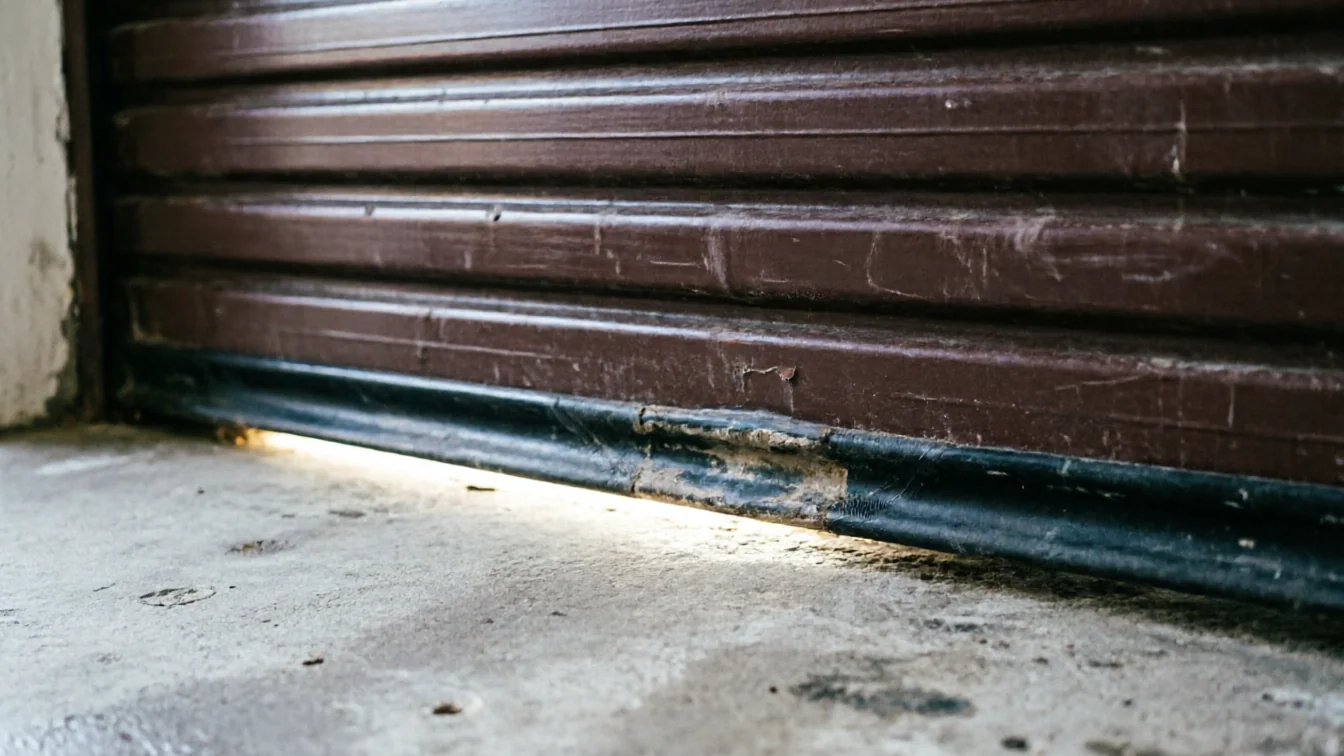
 Weather Seals and Draughts in Garden Grove Homes
Garden Grove homes built mostly in the 1960s have original seal channels that don't fit today's weatherstripping.
Why Garden Grove's Older Doors Need Different Care
Garden Grove's housing dates mostly to 1938-1995, and a lot of original doors on these homes went up before insulation standards existed. Here's what that means for you.
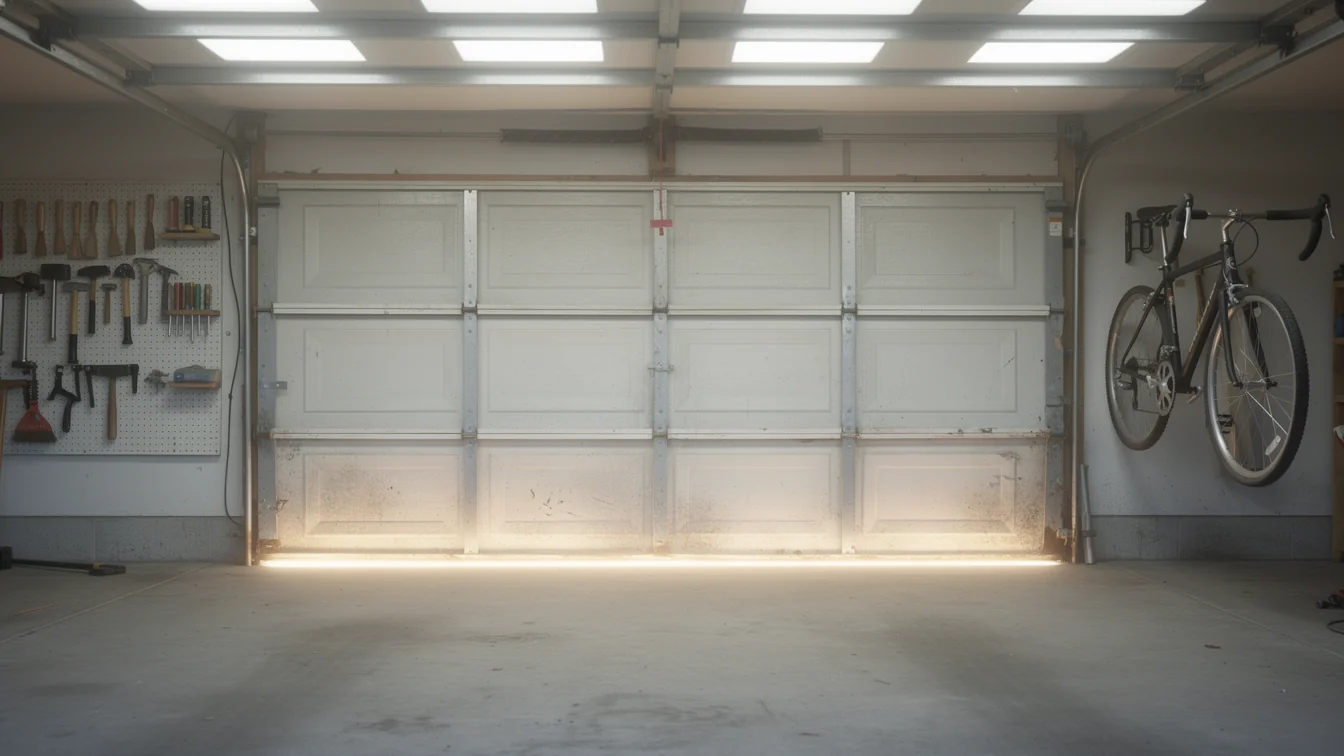
Local detail
When to Get Help
If your house in Garden Grove was built anywhere in the 1938 to 1995 range - and most were, with the median landing around 1966 - there's a decent chance the garage door on it is either original or a like-for-like replacement from decades back. Those doors went up before insulation requirements were part of the code conversation. That matters when you're deciding whether to call someone.
Watch for a door that feels noticeably heavier to lift by hand than it used to, or one where the bottom panel has started to bow inward at the center. On a single steel skin with no insulation backing, that bowing is structural fatigue, not cosmetic. If the door bangs when it closes, or the opener strains and reverses partway through a cycle, the spring tension was likely set for a door that's lighter now than it was when installed, because the steel has thinned or the panel has deformed. Don't wait for a cable to snap before calling. A door that's already sagging is a door that's close to a bigger failure, and on these older panels there usually isn't a quick patch - the fix is often a full section or a full door.
The area
What Local Conditions Do
Garden Grove sits in a mild temperate band - no deep freezes, no monsoon humidity swings. That sounds like good news for a garage door, and in one sense it is: you're not fighting the kind of expansion-contraction cycling that cracks panels in harsher climates. But mild doesn't mean static. Daily swings between a cool morning and a warm afternoon still put uninsulated steel through thermal movement, every single day, for 50-plus years on a lot of these houses.
On a door with no foam or polystyrene backing, that movement isn't absorbed by anything. The steel skin itself does the flexing, panel after panel, cycle after cycle. Over decades that shows up as hairline stress fractures near the hinge points and gradual warping along the horizontal seams - not dramatic, just steady wear that adds up. It's a slow problem, which is exactly why so many of these original doors are still technically functioning but quietly past the point where repair makes sense.
What we find
The Problem
Across the 57 named areas that make up this part of the county, the housing stock leans heavily 1960s and 70s. That's not an incidental detail - it's the whole reason this page exists. A door built to the standards of that era is a single steel skin, sometimes with a decorative wood-look overlay, with no insulation layer and hardware sized for that lighter, simpler construction. No vapor barrier, no thermal break, no foam core.
The practical problem is that the springs, cables, and tracks on these doors were matched to the door as built. When a panel warps or a previous owner swapped in a heavier replacement panel without rebalancing the spring, the whole system is working against itself. You end up with an opener that's doing more lifting than it was designed for, which burns out the motor faster, or a spring that's under- or over-wound for the door's actual weight today. None of this shows up as one dramatic failure. It shows up as a door that gets a little harder to live with every year until something finally gives.
How we work
Where People Go Wrong
The most common mistake we see is someone buying a peel-and-stick insulation kit for an original 1960s or 70s door and expecting it to solve a noise or temperature complaint. The kit adds weight. On a door and spring system that was never sized for that extra mass, the result is a door that's harder to lift, an opener strain, or a spring that's suddenly undersized for the job. Insulation retrofits can work, but only when someone rebalances the spring tension to match the new weight - skip that step and you've traded one problem for another.
The other mistake is chasing a repair on a door that's genuinely past it. Here's the honest limit: if the panel is original to a house built in that 1938-1995 window and it's already warped or fractured along a seam, patching it usually buys you a year, maybe two, before the same spot fails again. At some point replacement is the cheaper call, not because we'd rather sell a door, but because repeated repairs on steel that's structurally tired just don't hold. We'll tell you when you're at that point instead of running the meter on a door that's not coming back.
Questions
Common questions
Is my garage door original to the house if it was built in the 1960s?
It's common in this area. A lot of houses from that 1938-1995 build window, especially the 60s and 70s cluster, still have either the original door or an early like-for-like replacement with the same no-insulation construction. If you've never replaced it and the house dates to that era, assume it's uninsulated steel until you check.
Does Garden Grove's mild climate mean insulation doesn't matter?
It reduces the urgency compared to places with harsh winters, but it doesn't eliminate the issue. Daily temperature swings still flex an uninsulated steel panel over decades, and that steady cycling is part of why original doors from the 1960s and 70s show stress fractures and seam warping even without extreme weather.
Can I just add insulation to my old door myself?
You can, but the added weight changes how the spring needs to be set. A door balanced for its original lighter weight will be harder to lift and harder on the opener once insulated. If you add insulation, the spring tension needs rechecking at the same time, not left as-is.
Recommendation
You Might Also Like
More garage door guides for Garden Grove homeowners.
Weather Seals and Draughts in Garden Grove Homes
Garden Grove homes built mostly in the 1960s have original seal channels that don't fit today's weatherstripping.
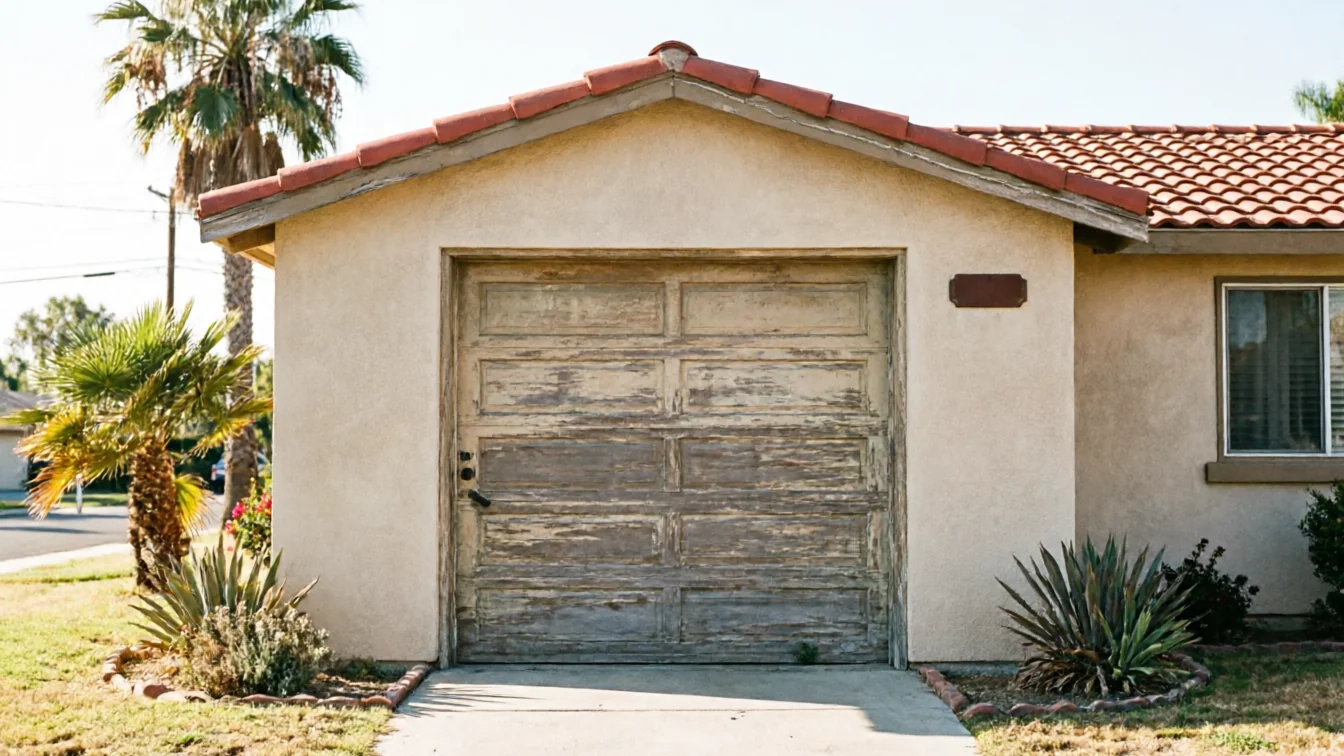 What an Older Garage Door Is Worth Fixing in Garden Grove
Garden Grove homes mostly date to the 1960s and 70s.
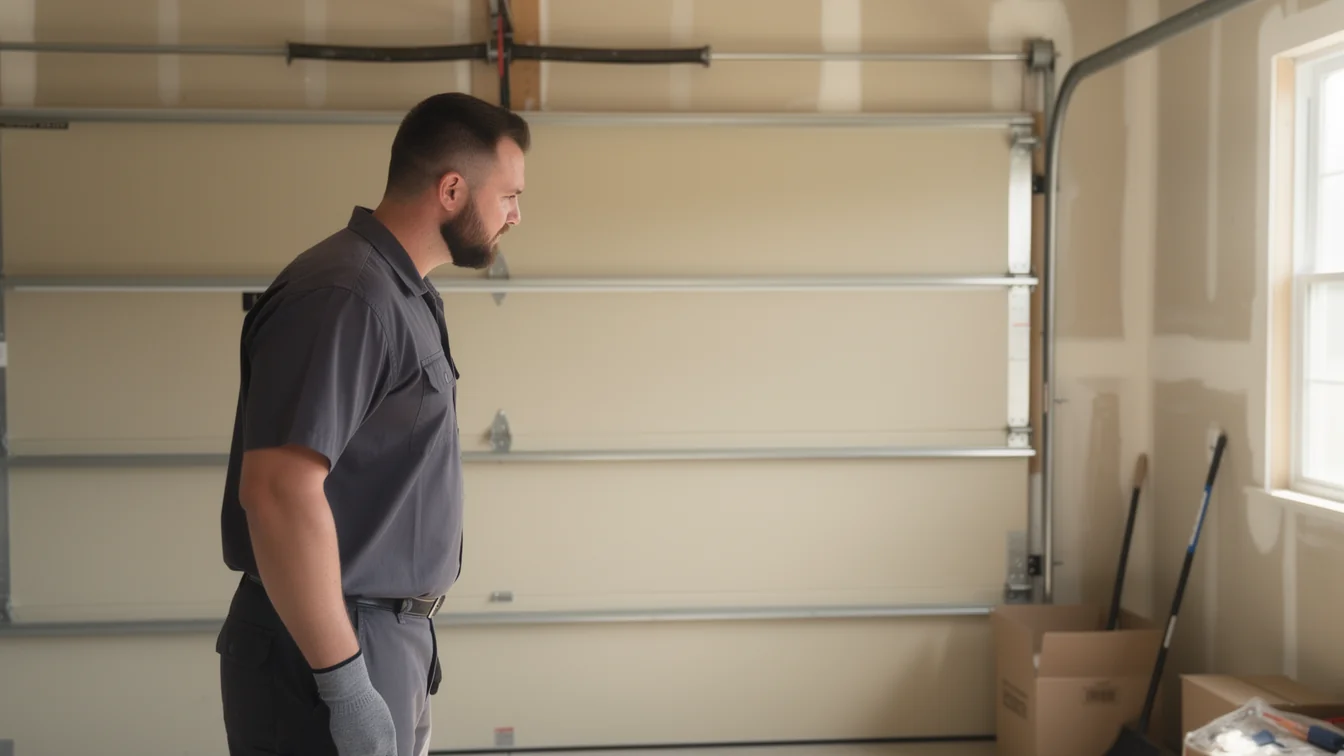 What That Noise in Your Garage Door Is Actually Telling You
Garden Grove homes mostly date to the 1960s and 70s, which means specific noise patterns point to specific parts.
Ready when you are
Need a garage door sorted in Garden Grove?
Garden Grove Garage Door Pros repairs and installs garage doors, springs and openers in Garden Grove, CA and the surrounding area.