 What That Noise in Your Garage Door Is Actually Telling You
Garden Grove homes mostly date to the 1960s and 70s, which means specific noise patterns point to specific parts.
What an Older Garage Door Is Worth Fixing in Garden Grove
Garden Grove homes mostly date to the 1960s and 70s. Here's how to tell if your original garage door is worth repairing or past the point of saving.
Local detail
When to Get Help
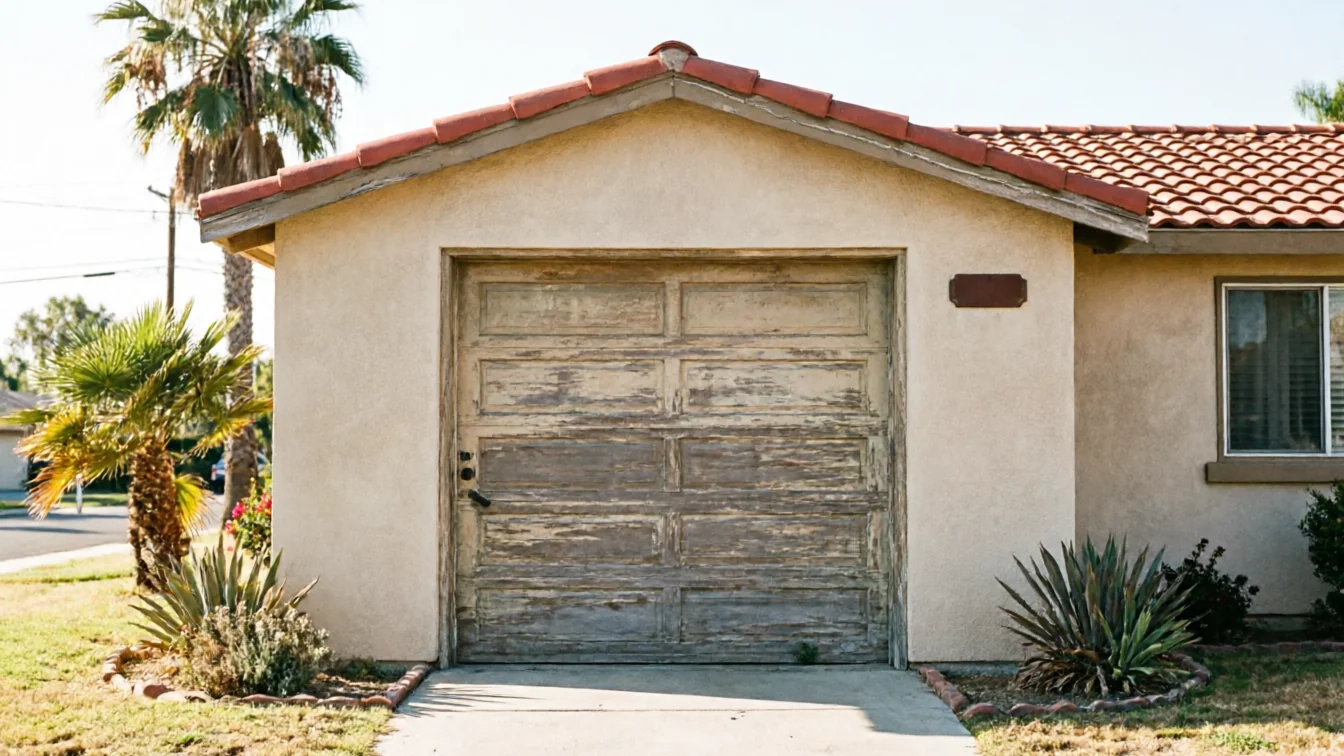
Garden Grove's housing stock runs from 1938 to 1995, with most of it built in the 1960s and 70s across the city's 57 named neighborhoods. That means a lot of original or near-original garage doors are still hanging on tracks and hardware that are older than most of the people using them. If your door is from that build era and it's sagging, binding, or the opener strains to lift it, that's not a sign to wait it out. Call when the door won't stay up on its own once disconnected from the opener, when a cable has frayed, or when a torsion spring has visibly separated. Those are safety issues, not cosmetic ones. If the door still tracks straight and closes square, but the finish is tired or a panel is dented, that's a maintenance call, not an emergency. The age of the house tells you what's likely inside the door - the symptoms tell you how urgent it is.
The area
What Local Conditions Do
Garden Grove sits in a mild temperate climate band, so this isn't a town where doors fail from freeze-thaw cracking or extreme humidity swapping. That's actually good news for a lot of the 1960s-70s doors still in service here - the steel and wood from that era has held up structurally better than it would somewhere with harsh winters. What does wear out on a mild-climate schedule is hardware: springs lose tension through thousands of cycles, rollers dry out and chip, and galvanized parts eventually corrode from age rather than weather extremes. On a door built when the house was built - say, 1966, the median build year for this area - you're more likely looking at tired springs and worn rollers than at warped panels or rotted jambs. That changes the repair math. A door that's structurally sound but mechanically worn is usually worth fixing. A door that was already a weak build, mild climate or not, usually isn't.
What we find
The Problem
The real issue in a city with housing this old is that original doors often carry original hardware - springs, cables, and sometimes even the opener - that nobody stocks new anymore. A single door from the 1960s stock might use a spring size or a track width that's been out of production for decades. That's not a reason to replace the whole door automatically, but it is a reason a repair can take longer than a homeowner expects, since the part sometimes has to be special-ordered or substituted with a close match. With median household income in the service area around $97,712, most owners here can afford either path - repair or replace - so the decision usually comes down to the door itself: is the panel steel still straight, is the frame square, does the track show rust-through. If those are solid, fixing the mechanical parts is almost always cheaper than replacing a door that still does its job.
How we work
Where People Go Wrong
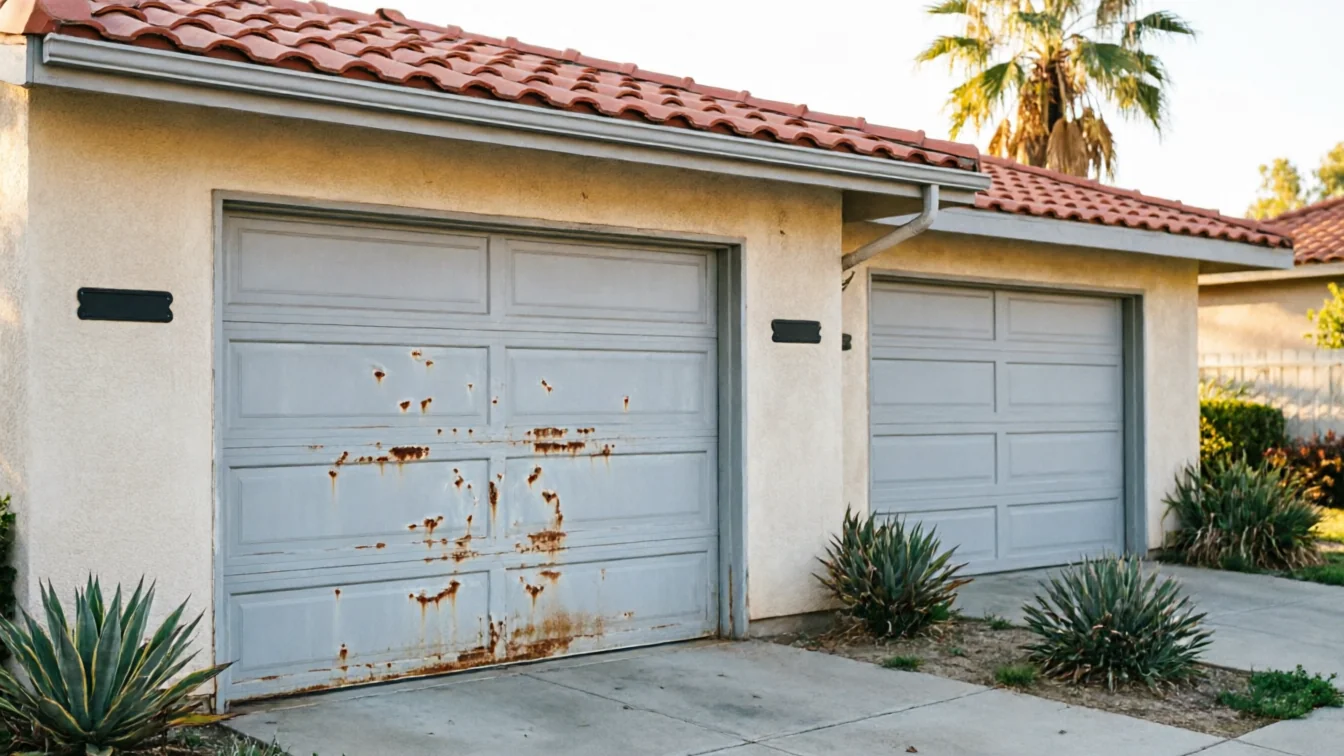
The most common mistake is treating every old door the same way - either replacing a perfectly sound 1960s door because it looks dated, or sinking repair money into a door whose panels have already started to separate or rust through at the bottom corners. In a city where most homes were built between 1938 and 1995, the door's age alone tells you very little; what matters is whether the original structure has held up, which in this mild climate is often yes. The other mistake is guessing at hardware instead of having someone look at the spring size, track gauge, and opener compatibility before quoting a fix. We don't carry every obsolete part on the truck for every build year in this area, and pretending otherwise just delays the job. If a door needs a part we have to source, we'll say so up front rather than promise a same-day fix we can't back up.
Questions
Common questions
How do I know if my garage door is original to the house?
If your Garden Grove home was built in the housing boom years common here, roughly the 1960s and 70s, and the door has never been replaced, you'll usually see a plain steel panel design, a spring system without safety cables, and an opener that looks older than the house's last remodel. Any of those three is a strong sign it's original.
Does the mild climate here mean doors last longer?
It helps. Garden Grove's mild temperate climate means doors here aren't fighting freeze-thaw cracking or major humidity swings, so steel and wood panels tend to hold their shape longer than in harsher climates. Hardware still wears out from use and age regardless of weather, so springs and rollers are usually the first thing to fail.
Is it ever cheaper to replace than repair an old door?
Yes, when the panel itself has rusted through, warped, or separated at the seams - repairing hardware on a damaged panel just delays a bigger job. If the structure is sound and it's only springs, cables, or rollers, repair is almost always the cheaper route.
Can you always get parts for a door from the 1960s?
Not always same-day. Some original hardware from that era isn't made anymore, and we sometimes have to source a close match or special-order a part. We'll tell you upfront if that's the case rather than promise a timeline we can't meet.
Recommendation
You Might Also Like
More garage door guides for Garden Grove homeowners.
What That Noise in Your Garage Door Is Actually Telling You
Garden Grove homes mostly date to the 1960s and 70s, which means specific noise patterns point to specific parts.
 Knowing When a Repair Isn't Worth It Anymore
Garden Grove homes mostly date to the 1960s and 70s.
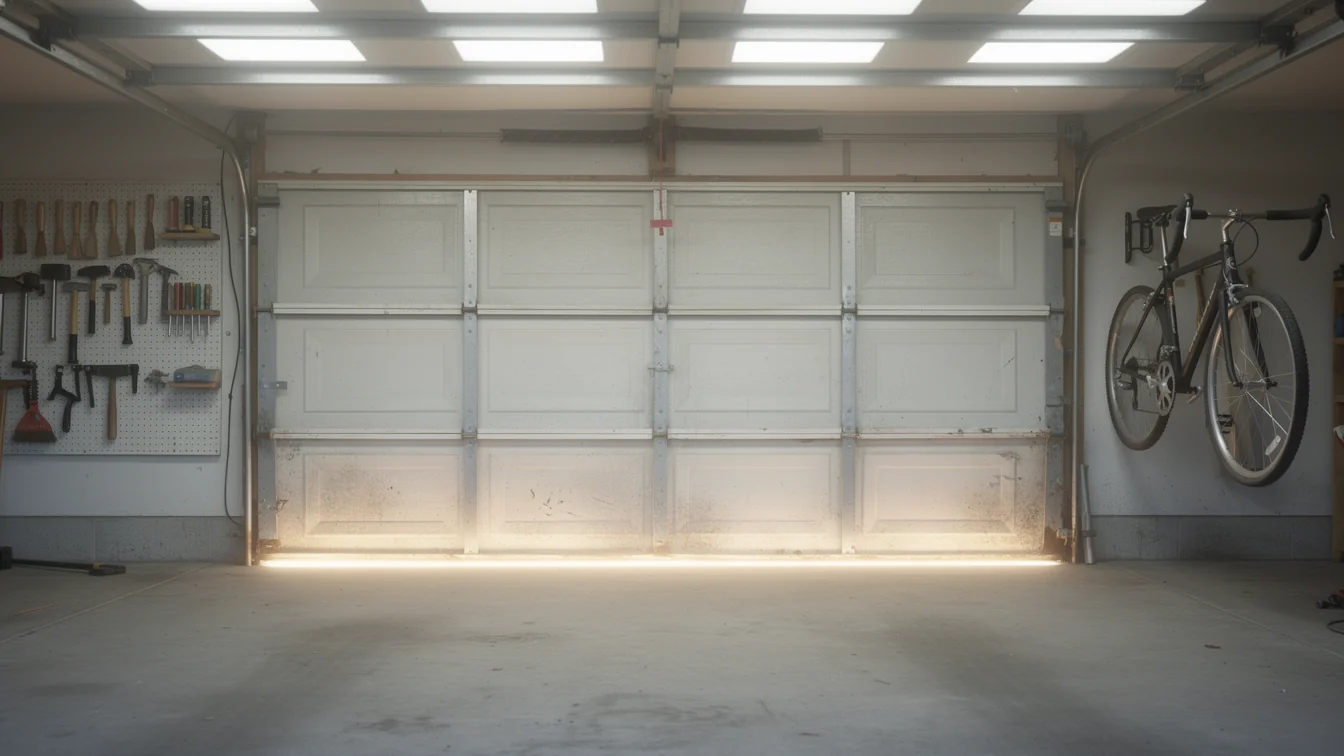 Why Garden Grove's Older Doors Need Different Care
Garden Grove's housing dates mostly to 1938-1995, and a lot of original doors on these homes went up before insulation standards existed.
Ready when you are
Need a garage door sorted in Garden Grove?
Garden Grove Garage Door Pros repairs and installs garage doors, springs and openers in Garden Grove, CA and the surrounding area.