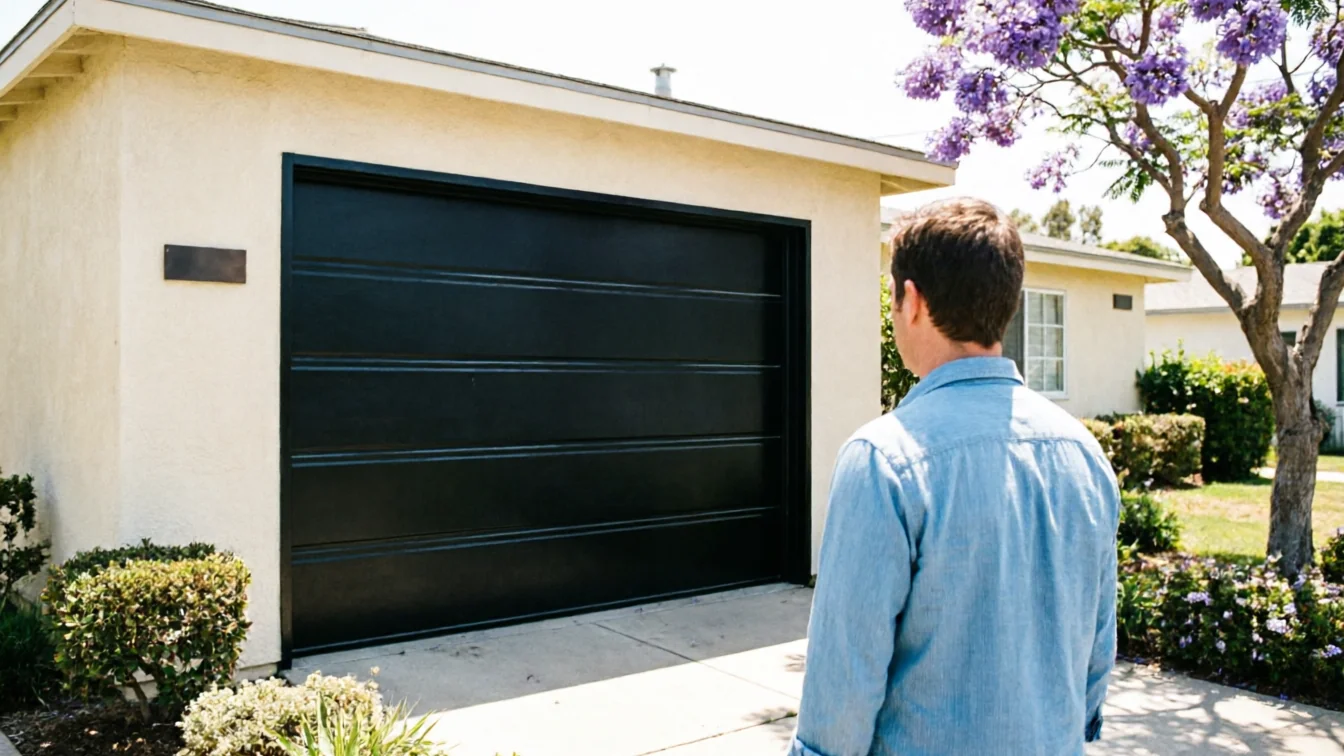
 What to Know Before Buying a Replacement Garage Door in Garden Grove
A guide for Garden Grove homeowners on replacing a garage door that matches the city's 1960s-70s housing stock and mild coastal-valley climate without overpaying.
What We Actually Check When We Come Out
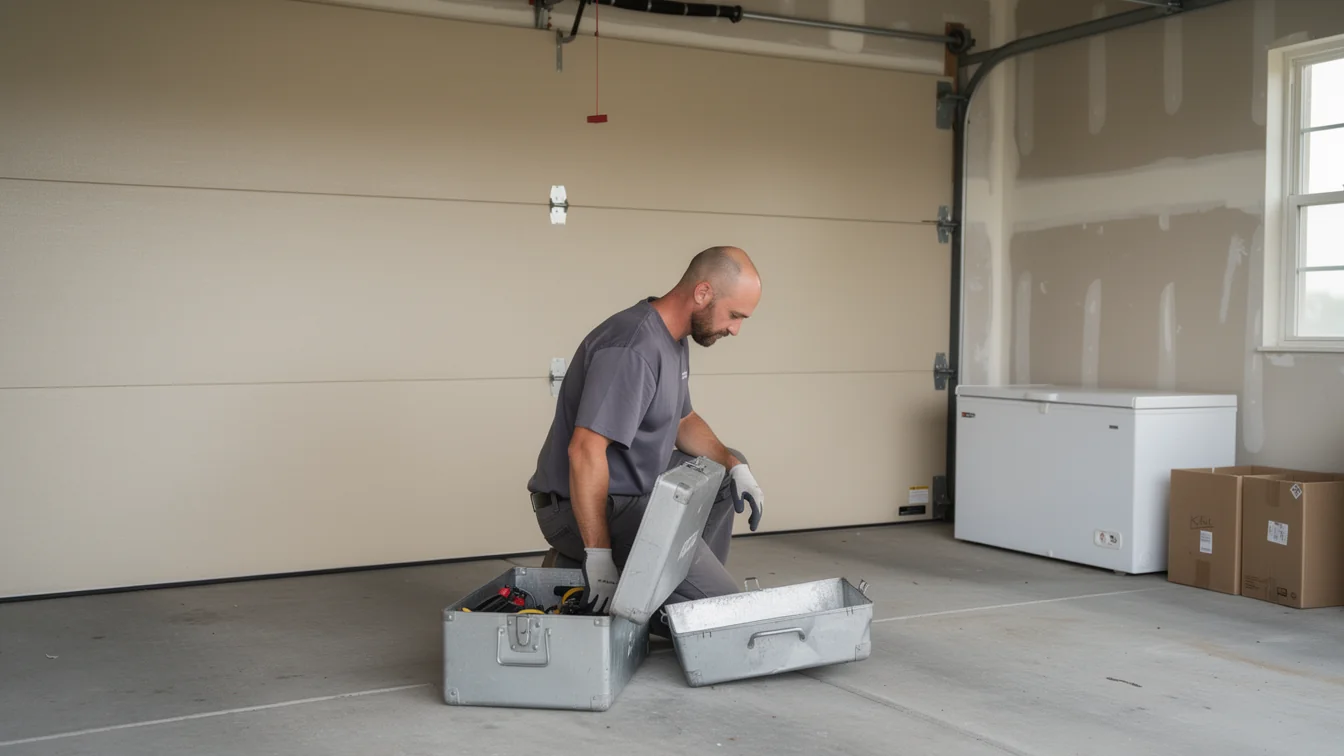
A plain breakdown of what a Garden Grove Garage Door Pros service call actually includes, tied to this city's 1960s-70s housing stock and mild coastal climate.
Local detail
When to Get Help
Most of the houses on this side of Orange County went up between 1938 and 1995, with the typical build year landing around 1966. That means a lot of what we open up is original garage hardware, or a straight one-for-one swap somebody did twenty years ago without upgrading the spring system underneath. If your door groans going up, if the opener strains on the last foot of travel, or if a cable looks frayed where it wraps the drum, that's the window to call before the spring lets go on its own. We also field calls from Stanton, Westminster, and Midway City, all within a few miles, where the same build era shows up the same way. A service call isn't a sales visit - it's us pulling the panel, checking torsion tension, and telling you straight whether you've got a ten-minute fix or a part that's worn past the point of patching. We'd rather tell you now than have you call back in three weeks with the same door stuck halfway up.
The area
What Local Conditions Do
Garden Grove sits in a mild temperate band, so we're not dealing with the freeze-thaw cycles that crack door sections inland or the deep humidity swings that rot wooden jambs up north. That's a real advantage - tracks don't ice over, springs don't contract overnight the way they do in colder climates. But mild doesn't mean nothing happens. Steady year-round sun bakes the lubricant out of rollers and hinges faster than owners expect, especially on doors that have never been serviced. Without the extreme weather to blame, a sticking door here almost always points to age and lack of lubrication rather than storm damage, which is actually good news: it's usually the cheaper problem to fix. A service call in this climate is less about storm-proofing and more about catching the slow wear that nobody notices until the opener starts working twice as hard as it should.
What we find
The Problem
Across the 57 named areas that make up this stretch of the county, the housing stock is overwhelmingly 1960s and 70s construction. That means steel sectional doors running on torsion springs sized for openers half the weight of what's sold today, and a lot of those springs are still the originals or a mismatched replacement from a prior owner. We see galvanized springs rusted at the coils even without extreme weather to blame, simply from decades of use. We also see openers bolted to joists that were never rated for the heavier insulated doors some owners have since installed. A service call covers inspecting the spring size against the door weight, checking the drum and cable path, and testing the opener's force settings - because on a door this old, the failure is rarely one single part. It's usually two or three worn components compensating for each other until one gives out.
How we work
Where People Go Wrong
With a median household income of $97,712 across the service area and 286,259 owner-occupied houses among 704,814 households, most people here can afford to replace a worn spring system outright instead of patching it a third time - but plenty don't, because a patched door still opens. The mistake we see most is buying a universal replacement spring online for a door built in the 1960s, where the drum size and wind direction don't match, and the door ends up more unbalanced than before. The other mistake is ignoring a slow-closing door for months, assuming it's
Questions
Common questions
What does a basic service call include?
We check spring tension against your door's actual weight, inspect cables, rollers, and hinges for wear, test the opener's force and travel limits, and look at the track alignment. On houses from this area's 1960s-70s building wave, we pay close attention to whether the spring was ever upsized to match a heavier replacement door.
Do you fix weather damage from storms?
Garden Grove's mild temperate climate means we rarely see storm-driven failures like warped wood from freeze-thaw cycles. Most calls here trace back to age and wear on original hardware rather than weather, so a service call focuses on mechanical condition, not storm repair.
Is it ever not worth repairing?
Yes. If the door itself is original to a house built in the 1930s-60s range and the panels are rusted through or the track is bent beyond adjustment, we'll tell you replacement costs less over time than another repair. We won't sell a patch job on a door that's done.
How do I know if my spring is the wrong size?
A door that feels heavy when lifted by hand with the opener disconnected, or one that slams down instead of lowering evenly, usually has a mismatched or fatigued spring. This shows up often on homes with original 1960s-70s hardware where a prior owner swapped the door but not the spring.
Recommendation
You Might Also Like
More garage door guides for Garden Grove homeowners.
What to Know Before Buying a Replacement Garage Door in Garden Grove
A guide for Garden Grove homeowners on replacing a garage door that matches the city's 1960s-70s housing stock and mild coastal-valley climate without overpaying.
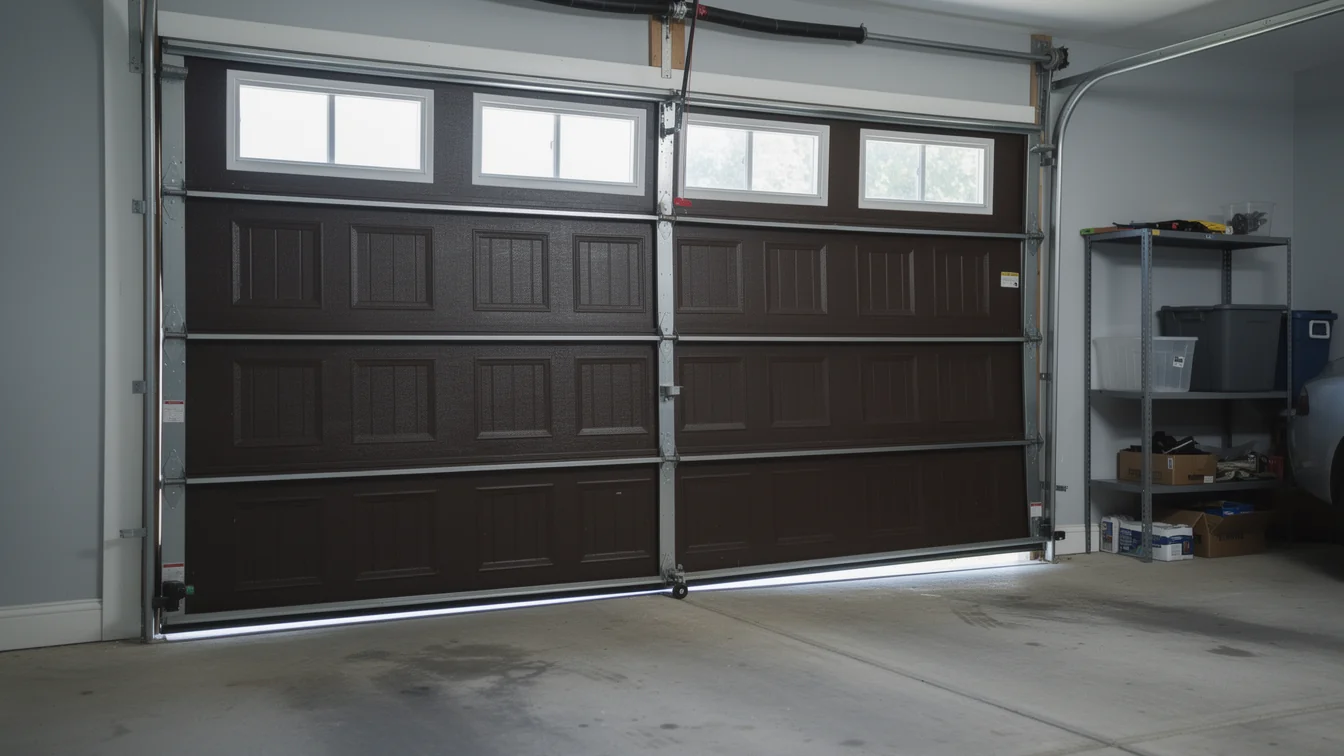 Off-Track Doors in Garden Grove: What's Really Going On
Garden Grove's 1960s tract garages and mild coastal climate wear tracks differently than newer builds.
 Detached and Attached Garages Fail Differently Here
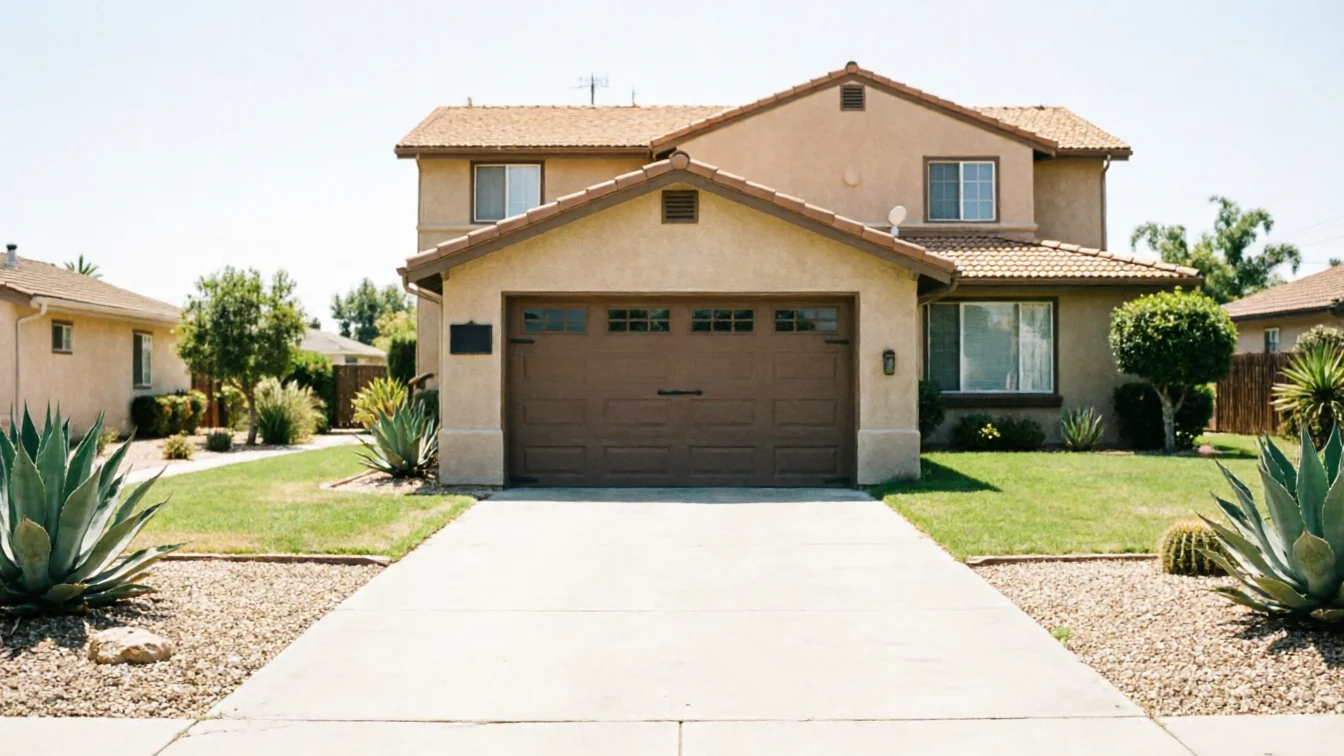
Garden Grove's housing stock runs 1938-1995, and that era split the city between detached garages and attached ones.
Ready when you are
Need a garage door sorted in Garden Grove?
Garden Grove Garage Door Pros repairs and installs garage doors, springs and openers in Garden Grove, CA and the surrounding area.