Lakewood, Garden Grove
Roller Replacement for Lakewood's 1957-Era Doors
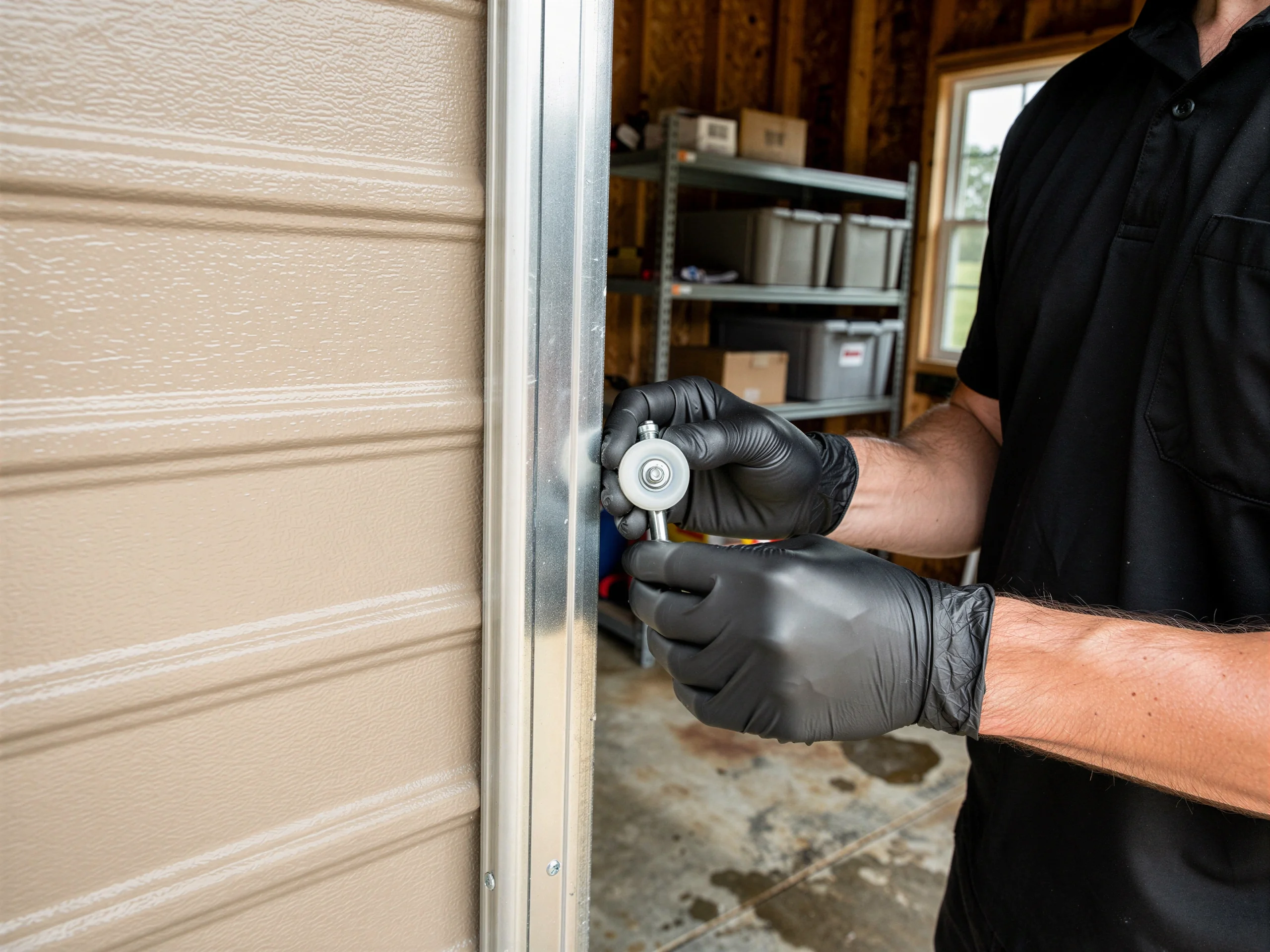
Lakewood homes mostly date to 1957, meaning steel rollers on original track that's 65+ years old. We travel from Garden Grove to swap worn rollers and tune the track.
The Symptom
Most houses in Lakewood went up around 1957, and a lot of them still carry the garage door hardware that came with the build. That's not a guess about age - it's the math of a neighborhood that was framed, roofed, and driveway-poured in one long stretch rather than infilled piecemeal over decades.
Roller fails first
The roller is usually the first thing to fail because it's the only moving part riding steel-on-steel inside the track every single time the door runs. You'll hear it before you see it: a grinding or hopping sound right as the door clears the bottom bracket, worse in the morning when the grease has gone stiff overnight.
Catch at track curve
Some owners feel the door catch slightly at the curve where the track bends from vertical to horizontal - that's the roller's bearing surface wearing flat on one side instead of staying round.
Rollers rarely swapped alone
On a door this old, the rollers were almost never swapped out on their own; if anyone touched the hardware, it was probably the whole opener, not the track parts.
Getting It Booked In
We run this job from Garden Grove, about 10 miles over, so we schedule Lakewood roller calls in blocks rather than one-off runs - it keeps the truck trip worth making and keeps the price fair for you.
Noise direction clues
When you call, tell us whether the noise happens on the way up, the way down, or both, and whether the door still opens smoothly by hand with the opener disconnected. That tells us if we're looking at a roller problem alone or a roller that's been quietly chewing at the track for a year.
Roller count on-site
We don't quote a fixed number of rollers over the phone sight unseen - a door built in the late 1950s sometimes has eleven or twelve rollers depending on panel count, and until we're standing in front of it we won't know which ones are shot versus which ones are just noisy.
Short roller job
What we can tell you up front is that this is a short job once we're on site: pull the old rollers, check the track for flare or dents, set new ones, and run the door a dozen times to listen for anything left over.
Where This Job Goes Sideways
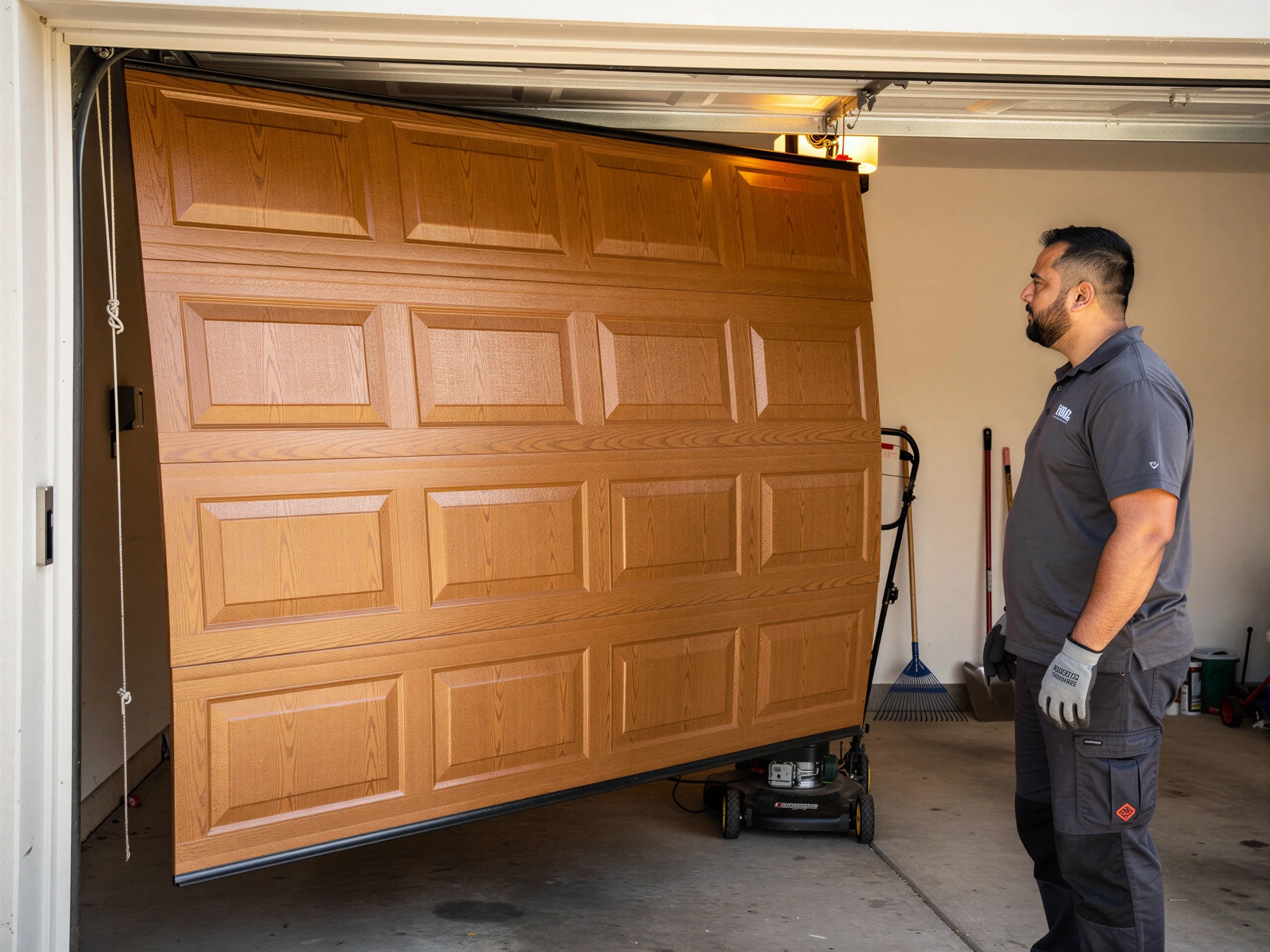
The honest limitation first: if the track itself is bent or flared from years of a bad roller grinding against it, swapping the roller alone won't fix the noise - we have to straighten or replace the track section too, and that's a different job with a different price.
Damaged rail from rollers
We see this more in Lakewood than in newer stock nearby because the original rollers here have often been limping along for so long that they've done real damage to the rail before anyone calls.
Painted bottom bracket
The other place it goes sideways is the bottom bracket - on doors this old it's sometimes been painted over or rusted at the bolt, and that bracket holds spring tension, so it's not something to force loose with a wrench and no plan.
Stainless or nylon upgrade
Lakewood's median household income of $116,794 is well above the wider Garden Grove service area's $97,712, and we mention that only because it tends to mean owners here ask for the full stainless or nylon roller upgrade rather than the cheapest steel swap - worth deciding before we're mid-job, not after.
Stocked Parts
We carry nylon rollers with sealed bearings on the truck because they fit the vast majority of the residential track still running in houses built from the late 1930s through the mid-1990s across this service area, and Lakewood's 1957 median falls right in that window. What we don't always carry is the oddball steel roller stem length that some original 1950s hardware used - if your bracket takes a shorter stem than the modern standard, that part may need to be ordered rather than pulled off the shelf, and we'll tell you that on the spot rather than make you wait to find out. The mild temperate climate here doesn't stress rubber or nylon the way a harsher freeze-thaw region would, so once new rollers are in, most owners don't think about them again for years. We price roller jobs by count and bracket condition, not by a flat number, because a 1957 door with a damaged track costs more to finish right than the roller alone.
Questions
Common questions
How many rollers does a Lakewood garage door usually need replaced?
It depends on panel count and how long the old ones ran worn. A lot of Lakewood's 1957-era doors have higher roller counts than newer builds. We count and inspect each one on site rather than quoting a number over the phone, since a few might still be fine.
Do you travel to Lakewood for a single roller job?
Yes, we come from Garden Grove, about 10 miles away. We schedule these runs in blocks with other calls in the area to keep the trip worth it and the price reasonable for a job this size.
Will new rollers fix the grinding noise completely?
Usually, yes. But if the old rollers already flared or dented the track, the noise can persist until the track is straightened too. We check this before we quote so you're not surprised mid-job.
Can I upgrade to nylon rollers instead of steel?
We carry sealed nylon rollers on the truck as our standard stock, and they fit most track from the late 1930s through the 1990s. Steel upgrades exist but usually need to be ordered for older stem lengths.
Explore more
More Services in Lakewood
Cable Repair
Lakewood homes from the late 1950s run on cable and drum hardware that's aged out. Learn more →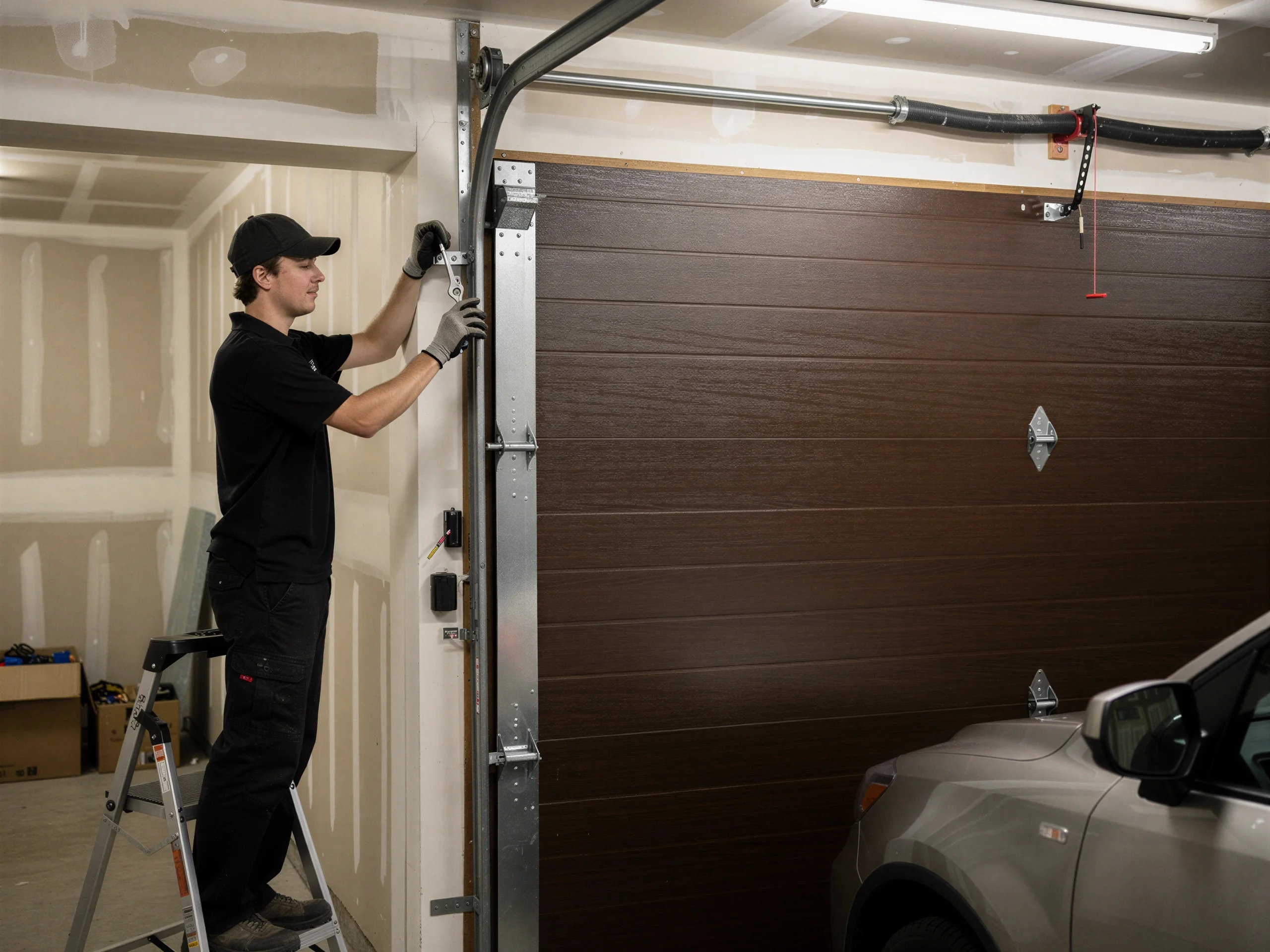
Garage Door Repair
Lakewood's houses mostly went up in 1957, years before extension springs gave way to torsion. Learn more →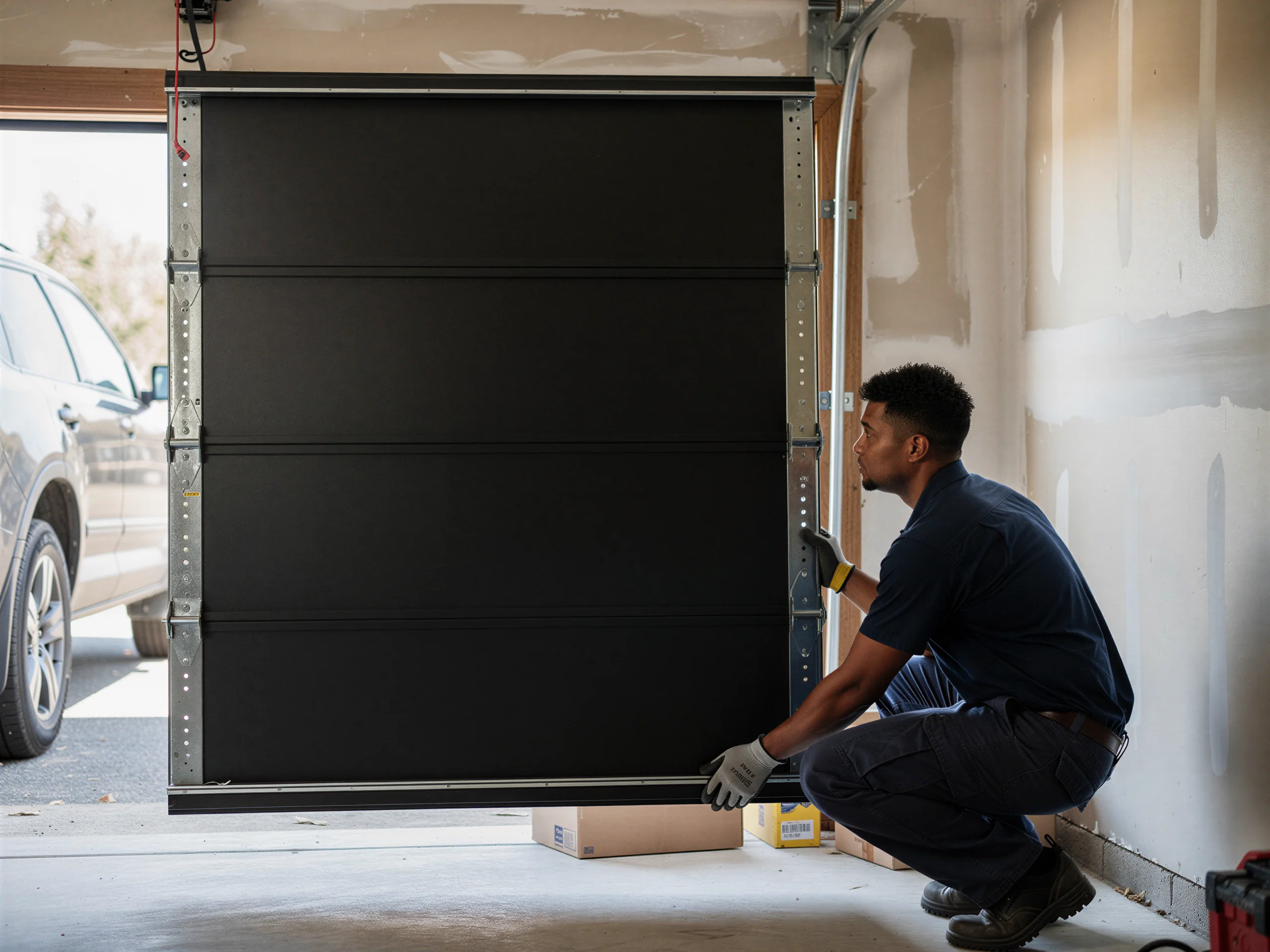
Garage Door Service
Garage door repair and tune-ups for Lakewood homes built mostly in the late 1950s. Learn more →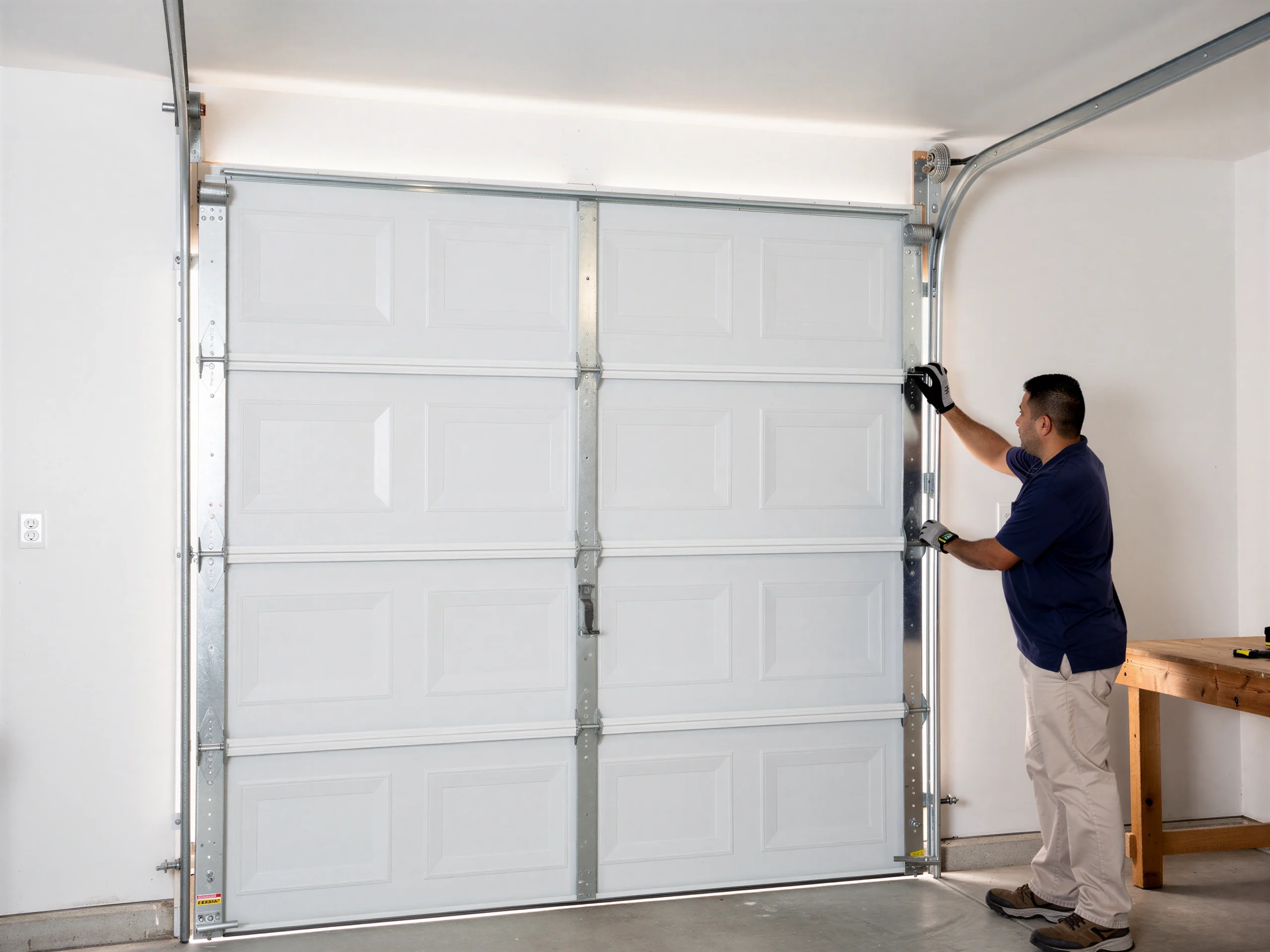
New Door Installation
New garage door installation in Lakewood, CA, where most houses date to 1957. Learn more →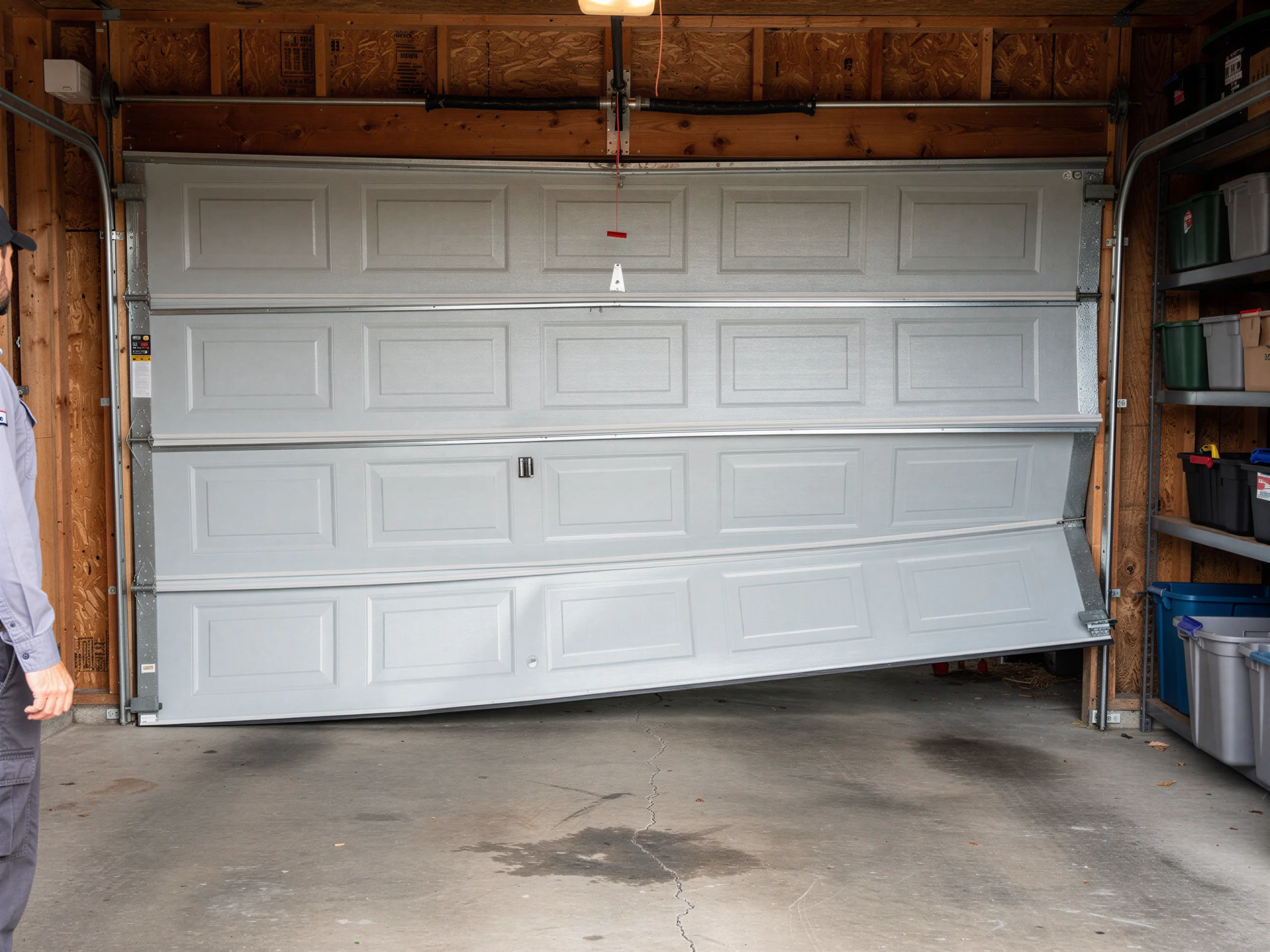
Off Track Repair
Lakewood's housing stock predates most of the service area by a decade, which means older track brackets and more off-track calls. Learn more →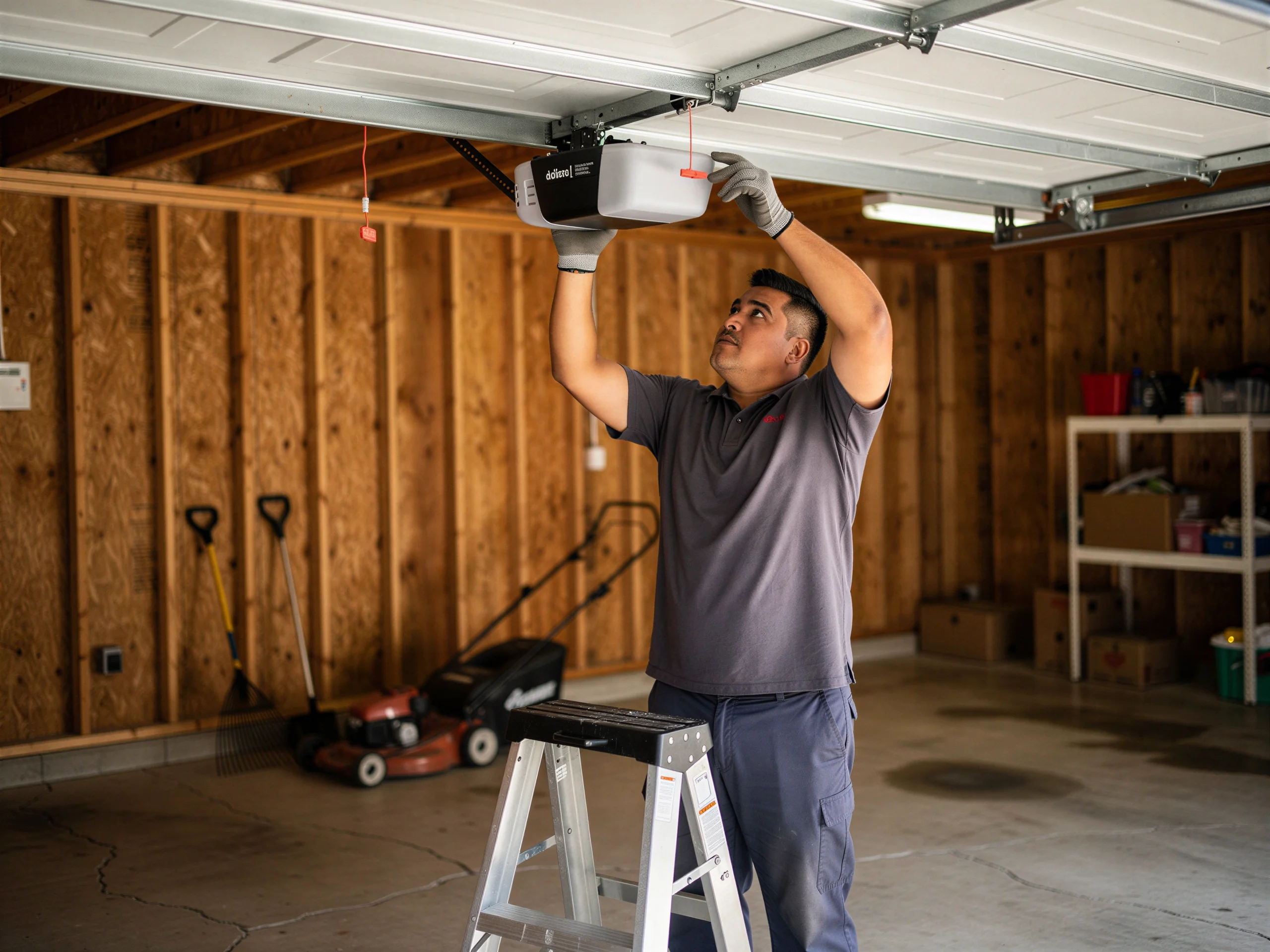
Opener Installation
Opener installs for Lakewood's 1957-era garages: header clearance, reinforced old doors, and rolling-code upgrades, done by the crew out of Garden Grove, 10 miles away. Learn more →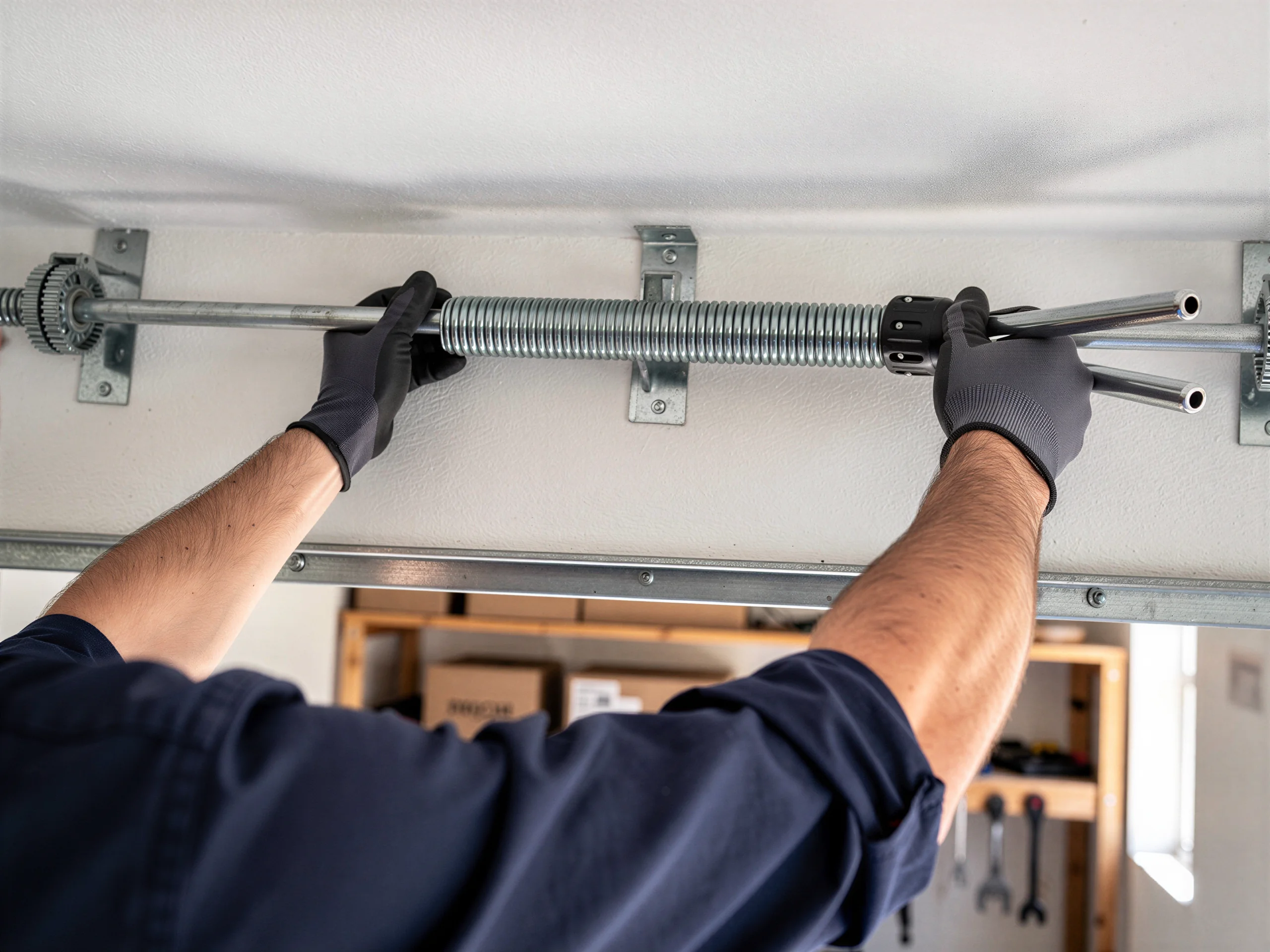
Spring Repair
Lakewood homes mostly went up around 1957, which means original torsion hardware on wood or early steel doors. Learn more →Ready when you are
Noisy or worn garage door rollers in Lakewood?
Garden Grove Garage Door Pros repairs and installs garage doors, springs and openers in Garden Grove, CA and the surrounding area.